About
An engineer who learned to read the markets, and a writer who tells the truth about what that takes.
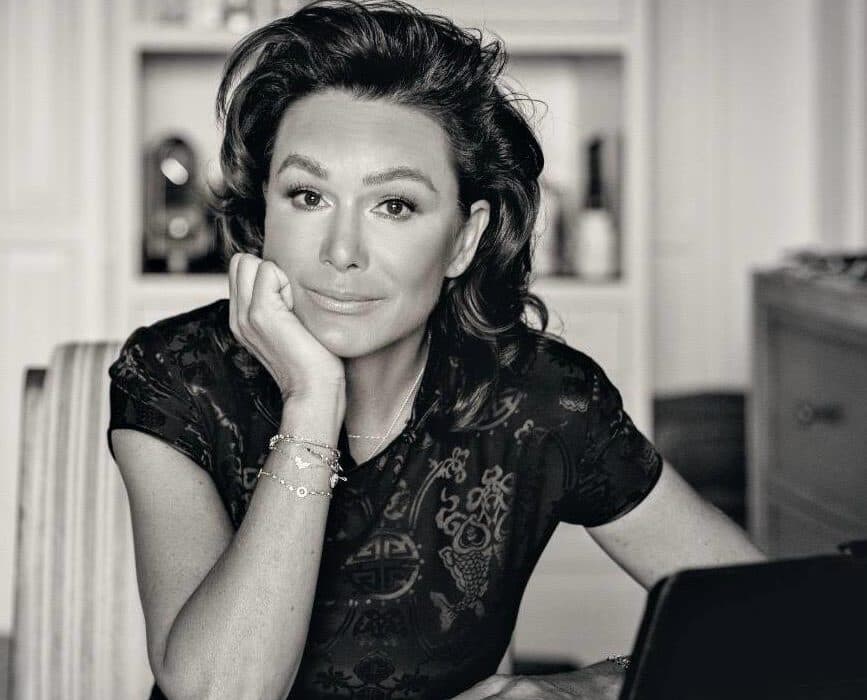
Olga Magomedova trained as an aircraft engineer. It is the background most journalists open with, partly because it sounds unusual for a trader and partly because, once you understand what engineering teaches a person, it explains most of her work. Tolerances. Failure modes. The quiet assumption that a system has to survive its worst day, not just its best one.
Why she moved from engineering into the markets
She does not romanticise the transition. The decision to study markets was practical. Engineering had taught her how to think about uncertainty as something measurable rather than something to fear, and she wanted a craft that would let her apply that discipline without being tied to a particular employer or geography. Trading offered an environment where preparation was the entire point.
The early years were unglamorous. She read more than she traded. She kept written notes on every decision she took and every one she chose not to take. She rebuilt her position sizing rules whenever the data she gathered on herself suggested they needed adjusting. None of it produced a story worth telling at a dinner party. All of it produced the foundation she would later need.
The moment preparation became survival
When her former husband's business collapsed, Olga's trading became the household's primary support. Many people meet that kind of moment as a shock. For her, it was closer to a confirmation. The years she had spent thinking about systems, risk budgets, and emotional control had not been a hobby. They had been the work of building something durable, before she knew she would need it.
Life can change at any moment. Your independence and skills are the only foundation you can truly rely on.
The line gets repeated by readers because it is plain. She means it in the practical sense. The independence she relied on in that period was not a feeling. It was a set of habits that had been running long enough to be invisible.
Motherhood as engine, not obstacle
Olga is direct about motherhood. She rejects the framing that treats children and ambition as competitors. In her account, parenthood is what makes her work serious, not what makes it harder. Discipline, preparation, the willingness to take a flat day seriously: these are the qualities she wants her children to see in practice, not in a book.
My children are my reason to push higher, not a limitation.
The public voice
Her writing began as an attempt to push back against two narratives she found increasingly tiresome. The first is that trading is a personality, dominated by bravado and reflex. The second is that women in finance must choose between family and career. Both, in her view, are myths that survive because they make decent television. Neither holds up to a real trading day, and neither holds up to a real household.
It isn't about bravado. It's about discipline, foresight, and the ability to stay calm under pressure.
What she is working on now
Recent essays focus on how retail traders should think about artificial intelligence: not as a replacement for judgment, but as an instrument that magnifies whatever discipline a trader already has, including the bad kind. She also continues to write about women entering markets, the financial literacy gap that still keeps many people away, and the slow, useful change happening in retail brokerage access.
Build your independence before you need it.
That line, more than any other, is the throughline of her work. Everything she writes returns to it. The argument is the same whether she is writing about risk budgets, AI signals, or the cultural barriers still operating quietly in the industry. Independence is built, not granted, and the moment you need it is the worst possible moment to start.